

11 March 2026
A Year of Translation: Strengthening Outcomes in Military Medicine
Military medicine operates under constraints that cannot be replicated in controlled environments. Time, distance, and operational complexity demand medical capability that can sustain casualties longer, restore readiness faster, and translate discovery into deployable solutions.
In 2025, Geneva’s network strengthened that capability at critical points along the continuum of care. Trauma survivability improved through innovative extracorporeal support. Musculoskeletal recovery timelines shortened. Biotechnology moved more quickly from laboratory discovery to practical application.
Sustaining survivability in modern trauma care
Extracorporeal life support and carbon dioxide removal technologies progressed meaningfully in 2025, improving the ability to sustain casualties during prolonged evacuation by increasing portability and deployability of these systems to settings outside of hospitals. Research within Geneva’s Autonomous Reanimation and Evacuation Research Institute & Innovation Center (AREVA) demonstrated that introducing nitric oxide into extracorporeal carbon dioxide removal systems reduced clot formation without systemic anticoagulation, which means that extracorporeal life support systems, previously contraindicated in trauma patients due to bleeding risk, will be used safely.
Complementary research clarified trauma-related immune and coagulation disruption, further strengthening the foundation for extended stabilization. The result is not simply incremental knowledge, but a stronger clinical foundation for extended stabilization under real-world constraints.
The Research for Combat Casualty Care Operations Network (REC3ON) team moved beyond publication to deliver deployable tools and training for austere and en route environments. The emphasis was practical integration under limited personnel, equipment constraints, and prolonged evacuation timelines.
Research in 2025 also clarified the long-term burden of combat-related injury. Ocular trauma, in particular, demonstrated how injury continues to shape health and readiness well beyond initial stabilization. The implications extend beyond acute care into prevention, early intervention, and sustained rehabilitation.
These advances reflect a shift in trauma care, from immediate stabilization to sustained survivability across extended operational timelines.
Redesigning musculoskeletal injury care to accelerate recovery
Musculoskeletal injuries remain one of the most persistent drivers of medical limitation and lost readiness. In 2025, research focused less on isolated interventions and more on system design.
Direct access to physical therapy improved recovery trajectories compared to traditional referral pathways, supporting earlier return to duty. The Musculoskeletal Injury Rehabilitation Research for Operational Readiness (MIRROR) program led a global effort to establish standardized definitions and reporting frameworks, enabling consistent comparison across studies and operational environments and strengthening the evidence base that informs treatment and policy.
Additional efforts improved diagnostic precision and advanced regenerative approaches, including 3D-printed bone implant designs to enhance healing in severe fractures. Collectively, these advances strengthened musculoskeletal injury care across the full recovery pathway, from diagnosis and rehabilitation through structural repair.
Advancing biotechnology to accelerate translation
Biotechnology efforts in 2025 focused on reducing the distance between discovery and operational application. Research at the USU Center for Biotechnology (4D Bio3) introduced 3D-printed platforms to improve organoid stability and longevity. Organoids serve as advanced biological models for studying disease and injury response, and improving their viability strengthens reproducibility and shortens the path to therapeutic development.
Parallel advances in regenerative engineering and biomaterials further expanded the ability to restore structural and biological function following severe injury. These efforts reinforce a broader shift: biotechnology is not simply supporting research, but accelerating the movement from laboratory insight to deployable capability.
Strengthening the system that sustains readiness
The research delivered across Geneva’s network reflects a system built to hold under pressure. Future conflicts will test medical capability in new ways, and progress will depend not only on scientific discovery, but on disciplined execution with clear operational relevance.
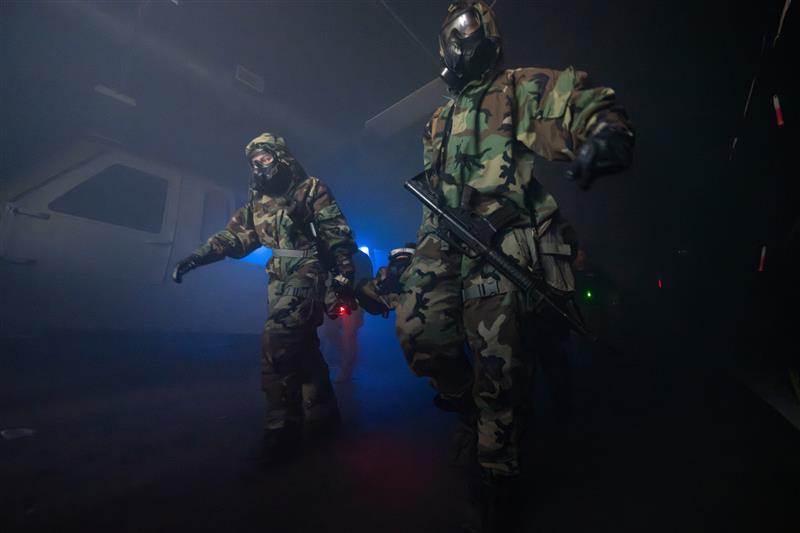
"Future conflicts will test medical capability in new ways, and progress will depend not only on scientific discovery, but on disciplined execution with clear operational relevance."
Allison Connelly

Allison Connelly
Officer of Strategy and Impact